How we ranked them
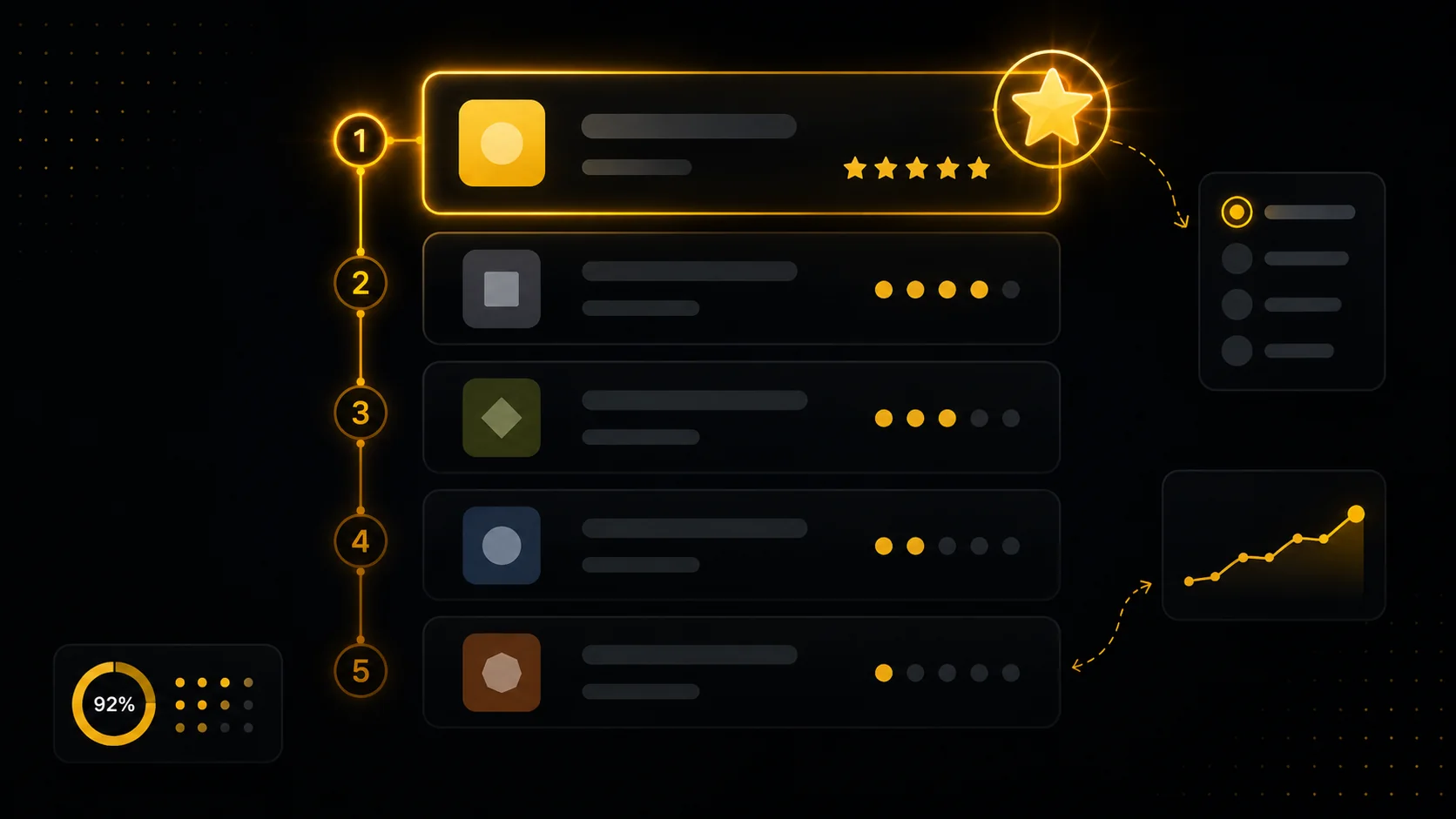
Before the list, the criteria, because "best" depends on what you are optimising for. I weighted each tool on the things that actually separate developer time trackers in practice: accuracy (does it capture real coding time), friction (does it need manual input or constant management), insight (does the data tell you anything useful), coverage (does it follow your work across editors, terminal, and AI sessions), and privacy (what it collects). Full disclosure: I build DevClocked, so I will be specific about where it wins and where another tool is the better call.
Quick Answer
The best time tracking tool for developers in 2026 is the one that captures your work without you managing it. DevClocked wins overall, because it infers coding time from Git plus a CLI tracker with no editor plugin, and covers terminal and AI-agent sessions. WakaTime is the strongest plugin-based option if you live in one editor. RescueTime is best for your whole computer, ActivityWatch for local-only privacy, Toggl and Harvest for client billing, Clockify for free team timesheets, and Waydev or GitClear for team and code-quality metrics. The ranked list, a comparison table, and honest notes on who each one suits are below.
The biggest divider in 2026 is how a tool captures time. Plugin-based tools watch one editor, whole-computer tools watch everything but understand none of it as code, manual tools depend on your memory, and git-based tools read where the work lands. That distinction matters more than any feature list, because a tool that misses your work is not accurate no matter how nice its dashboard is.
Comparison table
In the table, "no plugin" means it tracks without an editor extension, "git-based" means it derives activity from commits, "auto" means no manual timers, and "AI sessions" means it captures terminal or agentic coding.
| Tool | Best for | Capture | No plugin | AI sessions | Free tier |
|---|---|---|---|---|---|
| DevClocked | Overall, git-based + proof | Auto (git + CLI) | Yes | Yes | Yes |
| WakaTime | Single-editor power users | Auto (plugin) | No | No | Yes |
| RescueTime | Whole-computer time | Auto (app-level) | Yes | No | Limited |
| Clockify | Free team timesheets | Manual | Manual | No | Yes |
| Toggl Track | Freelancer billing | Manual | Manual | No | Yes |
| Harvest | Agency invoicing | Manual | Manual | No | Limited |
| ActivityWatch | Local-only privacy | Auto (app-level) | Yes | No | Yes |
| Waydev | Team delivery metrics | Auto (git) | Yes | No | No |
| GitClear | Code-quality analysis | Auto (git) | Yes | Partial | Trial |
The 9 best developer time tracking tools
1. DevClocked: best overall
DevClocked infers coding time from Git activity and a CLI tracker rather than an editor plugin, so it keeps counting across every editor, every machine, and terminal-based AI sessions like Claude Code, Cursor, and Codex. There are no timers to manage, and the same record that measures your time becomes proof of what you shipped, audited to source. For most developers in 2026, that combination of automatic capture, AI-session coverage, and a usable record is the right default.
Where it is not the pick: it is built around code and git, so it will not track your non-coding workday, and it is cloud-based rather than local-only.
Verdict: the best fit if you want accurate, hands-off tracking that follows your work everywhere and turns into something you can show.
2. WakaTime: best for single-editor power users
WakaTime is the original developer time tracker and supports nearly every editor through plugins, with detailed language and project breakdowns. If you genuinely live in one editor and keep the plugin maintained, it is excellent and granular.
The catch is the plugin model: coverage depends on installing and maintaining an extension everywhere you code, and it sees nothing in the terminal. See the WakaTime alternatives comparison for the trade-off in depth.
Verdict: strong for a committed single-editor user; fragile the moment your work moves.
3. RescueTime: best for whole-computer time
RescueTime tracks all computer activity, not just code, with focus tools to block distractions. If you want to understand your entire workday, including meetings and docs, it does that well.
It is not code-aware or git-aware, though, so it cannot give project- or commit-level coding insight. Pair it with a code-aware tool if you need both.
Verdict: the right tool for whole-day awareness, not for code-accurate hours.
4. Clockify: best free team timesheets
Clockify offers a generous free tier with manual time tracking, projects, and basic billing, which makes it popular with budget-conscious teams. It is general-purpose rather than developer-specific.
Because it is manual, accuracy depends on the team remembering to track, and it has no code or git awareness. See the dedicated Clockify alternatives for engineering teams.
Verdict: fine for free general timesheets, weak for automatic code-accurate data.
5. Toggl Track: best for freelancer billing
Toggl Track has polished reporting and strong invoicing, which makes it a favourite for freelancers billing a mix of work. It is manual, so the numbers are only as honest as your timer discipline.
For coding specifically, automatic capture beats manual every time, because developers reliably forget to hit start. See time tracking for invoicing for the git-based alternative.
Verdict: good general freelance billing; less accurate for code hours.
6. Harvest: best for agency invoicing
Harvest pairs time tracking with robust invoicing and expense tracking, which suits agencies and client-facing teams. It is built around manual entry and project budgets rather than developer workflows.
For an individual developer who wants automatic, code-level data, it is more billing suite than tracker.
Verdict: solid for agency billing, overkill for individual code tracking.
7. ActivityWatch: best open source and local-only
ActivityWatch is open source and runs entirely on your machine, so nothing leaves your computer. For privacy purists who want local-only data, it is the obvious pick and it is free.
The trade-off is setup and maintenance, and getting git- or code-level insight takes configuration you run yourself.
Verdict: the right call for local-only privacy, if you do not mind the upkeep.
8. Waydev: best for team delivery metrics
Waydev rolls git activity into engineering-intelligence dashboards like DORA metrics and delivery trends, built for managers viewing a whole team. It is git-based and needs no plugin.
It is priced and designed for organisations, roughly upwards of forty-five dollars per developer per month at the time of writing, so it is overkill for individuals and small self-serve teams.
Verdict: the manager's tool, not the individual developer's.
9. GitClear: best for code-quality analysis
GitClear analyses git history for code-quality signals like diff delta and line impact, and publishes respected research on AI-generated code. If your interest is the shape and quality of changes rather than hours, it is genuinely strong.
It measures code, not time or proof of work, and leans B2B, so it answers a different question than most of this list.
Verdict: excellent for code-quality measurement; pair it with a time tool.
Where DevClocked fits (and where it does not)
DevClocked is the best overall pick when you want accurate coding time with zero management and a record you can actually use, including as proof of what you shipped. Because it reads git and a CLI tracker, it does not develop the plugin gaps that per-editor tools eventually do, and it captures the AI and terminal work that is a growing share of real coding.
It is not for everyone, and that is worth saying plainly. If you want your whole computer tracked, RescueTime fits better. If you refuse any cloud, ActivityWatch is the honest pick. If you mostly bill non-coding client work, Toggl or Harvest will serve you. And if you are a manager who needs team-wide delivery metrics, Waydev is purpose-built for that. DevClocked earns its place when the work is in code and git and you want it captured reliably and turned into something you can show.
Related Guides
- How to track coding time from git: the no-plugin mechanism behind the top pick.
- Best WakaTime alternatives: the plugin-versus-git comparison in depth.
- Clockify alternatives for engineering teams: the team-focused version of this list.
- Developer time tracking for invoicing: billing from real coding hours.